Why the Enneagram?
“And what you thought you came for / Is only a shell, a husk of meaning / From which the purpose breaks.”
T.S. Eliot
“Little Gidding,” The Four Quartets
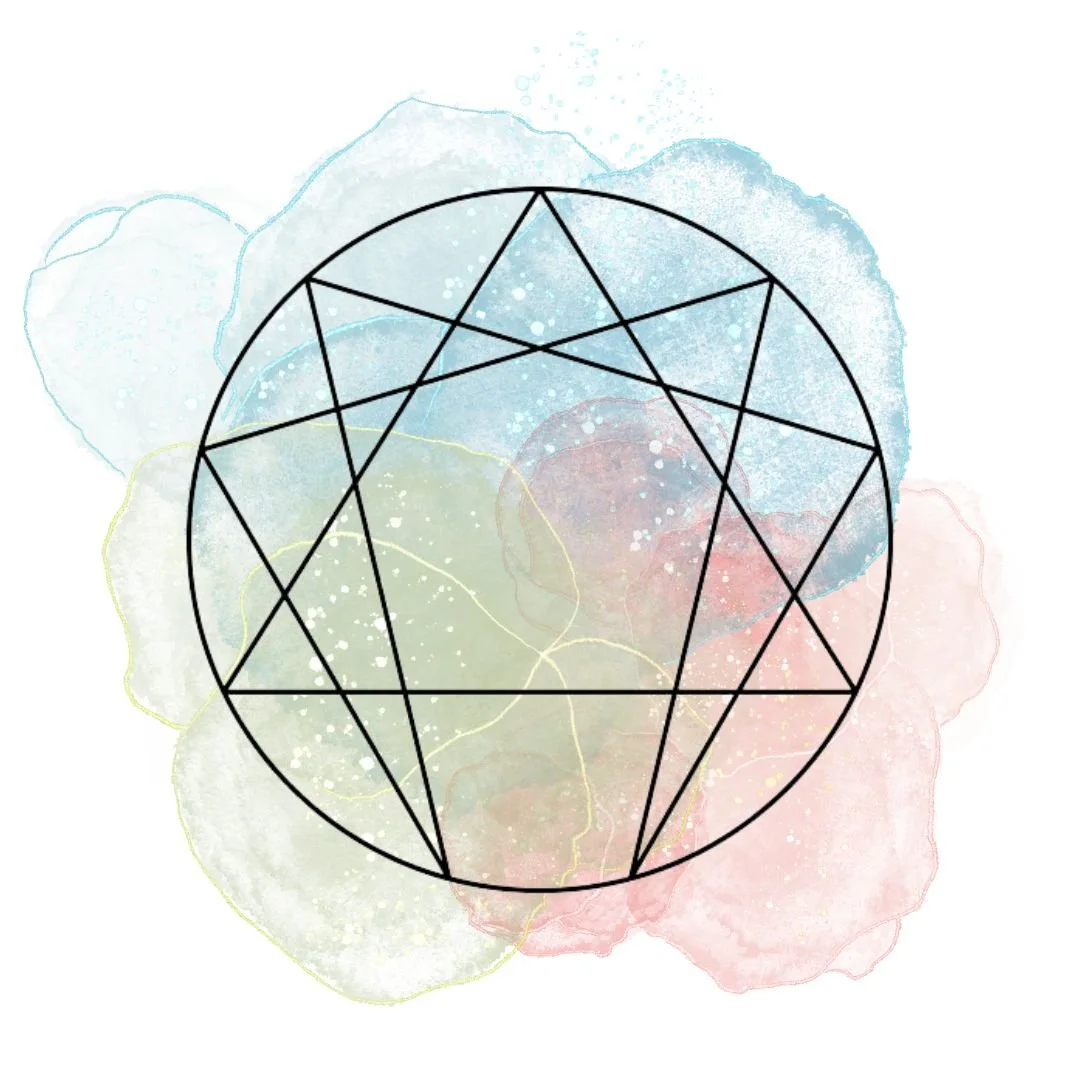
The Enneagram (“ennea” is Greek for “nine”) is a powerful, dynamic wisdom system outlining nine distinct patterns of thinking, feeling, and acting.
The symbol is not a stagnant image of individual points, but rather an interconnected map for personal and collective growth. Each of the nine patterns, or “types,” represents an adaptive strategy that we developed at an early age to protect an aspect of Self that felt threatened. Discovering more about our leading type brings greater understanding of our unconscious patterns and helps us wake up and live more conscious lives.
While the philosophical and spiritual roots of the Enneagram draw from various religious and mystical traditions, the Enneagram of personality is relatively modern. Bolivian psychologist Claudio Naranjo turned a psycho-spiritual lens to the Enneagram and brought his teachings and practices to the United States in the 1960s. For more on the traditional history of this system, you might explore the writings of Don Riso and Russ Hudson, founders of the Enneagram Institute.
While other personality systems focus on behavior, the Enneagram lovingly explores underlying motivation. In other words, it gets to the root of not what we do, but why we do it. It locates each type’s worldview — or “lens” — and automatic focus of attention. This awareness allows us to explore each type’s subsequent strengths, challenges, and opportunities for growth.
In understanding the patterns of our type, we can broaden our limited perspective, move from automatic to aware, and act with more choice and consciousness.
FAQs
-
This is a common misconception about the Enneagram system. No, on the contrary, learning more about how your type functions in your life can lead to greater accessibility and interior freedom. The Enneagram is definitively not a series of self-contained boxes, but a map highlighting connection to other type energies we can draw from on our journeys. The goal of working with this system is to loosen the hold of type and to come home to a deeper, less automatic relationship with ourselves.
-
Our type does not change, as it is a fundamental way that we live and operate in the world. However, as we grow, our type structure may become more flexible. Our behaviors may begin to look different as we evolve and make more conscious choices. Engaging in self-work can help us move out of limited perceptions and automatic patterns. This not only offers greater access to our strengths and gifts, but expands our point of view.
-
While we may resonate with multiple types, we lead with only one as our primary lens. If you are unsure of your leading type, firstly, you are not alone. Determining this can be a journey of self-reflection, self-awareness, and self-honesty. Often, people experience a particularly strong reaction to learning about their type, sometimes even embarrassment. This can range from a sense of being gently "found out" to being deeply seen and understood.
At the end of the day, determing one's type is an "inside job." It can be helpful to speak with someone who is trained to listen for deeper aspects of type. If you would like to schedule a 1:1 typing interview with me, please fill out my contact form here.
-
No type is better or worse than any other. Further, no two types are better or worse combinations in relationship. Each type holds a particular worldview, and with that come its own challenges and strengths. In exploring and working with our own type structure, though, we are capable of loosening the grip of type and gaining access to greater presence and more parts of ourselves. Some Enneagram teachings present this as “levels of health,” although I prefer to think of it as integration, of coming back home to our true nature (hey, that’s the name of this website!).
-
A valid question, thanks for asking! As the Enneagram of personality has gained popularity in the last few decades, there is a surplus of information available out there. Unfortunately, there is also a wealth of misinformation circulating about the Enneagram. After I was introduced to the Enneagram, I spent 3 years reading more about my type (and subsequently trying to type everyone around me!). But it was only when I started taking classes led by trained, certified teachers, within a community of other learners, that I began to notice deeper changes in how I understood my worldview and patterns in relation to other people. Simply put, this is a vast, nuanced, and transformative wisdom system. It can be even more challenging and confusing to go it alone. Subsequently, it can be immensely helpful to have guidance, companionship, and a well-timed dose of levity along the way.
Let’s chat!
Other questions? Burning curiosities? Ready to dip a toe in?
Fill out the contact form, and let’s be in touch.